Southeast Asian Unified Student Visa Simplify Study Abroad for Indian Students
Applying for a student visa is one of the most stressful steps for Indian students planning to study abroad.
Multiple embassies, repeated documentation, rising visa fees, and fear of rejection often delay or even cancel study-abroad dreams.
Now, a proposed Southeast Asia Unified Student Visa could remove these barriers, allowing students to study, travel, and gain international exposure across multiple countries with single visa application.
What is the Southeast Asian Unified Student Visa?
The Southeast Asian unified student visa is an ambitious proposal aimed at creating a single visa framework allowing students to study, travel, and conduct research across multiple ASEAN (Association of Southeast Asian Nations) member countries without requiring separate visa applications for each nation.
Similar to Europe’s Schengen visa system, this unified approach would enable students enrolled in universities within participating Southeast Asian countries to move freely across borders for academic purposes, internships, research collaborations, and cultural exchanges.
ASEAN Countries Involved
The proposed unified visa system would potentially cover all ten ASEAN member nations: Singapore (a global education hub), Malaysia (affordable quality education), Thailand (growing international programs), Indonesia (largest Southeast Asian economy), Philippines (popular for medical education), Vietnam (strong STEM focus), Brunei, Cambodia, Laos, and Myanmar.
This initiative aligns closely with existing regional collaboration platforms like the ASEAN University Network (AUN), which already promotes cross-border academic cooperation among leading universities in Southeast Asia
Why This Matters for International Students
Current Challenges
Multiple Visa Applications: Students pursuing regional programs currently need separate visas for each country, creating administrative burdens and significant additional costs.
Limited Mobility: Research collaborations, conferences, and academic exchanges are hindered by restrictive visa policies that don’t accommodate the fluid nature of modern education.
Competitive Disadvantage: Compared to Europe’s integrated system, Southeast Asia struggles to attract students seeking multi-country educational experiences.
Why Indian Students Are Looking Beyond Traditional Destinations
- India sent 13+ lakh students abroad in 2024, a 15% YoY increase
- Over 35% of Indian students now prefer cost-effective Asian destinations over the US/UK
- Southeast Asia offers tuition fees 40–60% lower than Western countries
- Visa approval rates for ASEAN countries are significantly higher than US/UK
Benefits of the Unified System
Enhanced Student Mobility: Students could participate in semester exchanges, joint degree programs, and research collaborations across borders without visa complications.
Cost Efficiency: A single visa application would significantly reduce financial burdens on students and families, making Southeast Asian education more accessible and competitive globally.
Academic Collaboration: Universities could develop more integrated regional programs, joint research initiatives, and shared resources, elevating education quality across the region.
Regional Integration: This supports ASEAN’s broader goals of economic and social integration through educational cooperation and youth exchange programs.
Impact of the Southeast Asia Unified Student Visa on Indian Students
Indian students represent one of the largest groups of international learners globally, and the unified Southeast Asian student visa could open unprecedented opportunities.
Current Indian Student Presence
Singapore hosts approximately 15,000-20,000 Indian students at world-ranked universities. Malaysia attracts over 10,000 Indian students with affordable tuition. Thailand and Philippines are growing destinations, particularly for medical education, with thousands of Indian students enrolled in MBBS and specialized programs.
Key Advantages for Indian Students
Regional Exposure: Experience multiple cultures, languages, and educational systems within a single academic program, developing truly global perspectives.
Enhanced Employability: Graduates with multi-country experience are highly valued by multinational corporations and regional businesses operating across Southeast Asia.
Research Opportunities: Access diverse research environments, from Singapore’s high-tech labs to Indonesia’s biodiversity hotspots and Thailand’s medical research facilities.
Cost-Effective Education: Students can optimize costs by studying in countries with lower living expenses while accessing resources in premium education hubs through exchange programs.
Network Building: Develop connections across multiple countries, creating valuable professional networks for future careers in Asia’s fastest-growing markets.
Language Skills: Opportunity to learn regional languages like Bahasa Malaysia, Thai, or Vietnamese alongside English-medium education, enhancing career prospects.
How the Southeast Asia Unified Student Visa Process Will Work for Indian Students
While specific implementation details are still being developed, the proposed system would likely operate on these principles:
Single Application Process
Students would apply once through a centralized system, providing documentation accepted across all participating countries. This eliminates multiple embassy visits and redundant paperwork.
Primary Institution Sponsorship
Students would be primarily enrolled at a “home institution” in one ASEAN country, which would sponsor their unified visa application, providing accountability while enabling regional mobility.
Duration and Travel Rights
The visa would cover the entire academic program duration, potentially ranging from one to four years for undergraduate and postgraduate studies. Visa holders would have rights to travel freely within participating ASEAN countries for academic purposes, including semester exchanges, research fieldwork, conferences, internships, and cultural immersion programs.
Timeline and Challenges
Expected Timeline
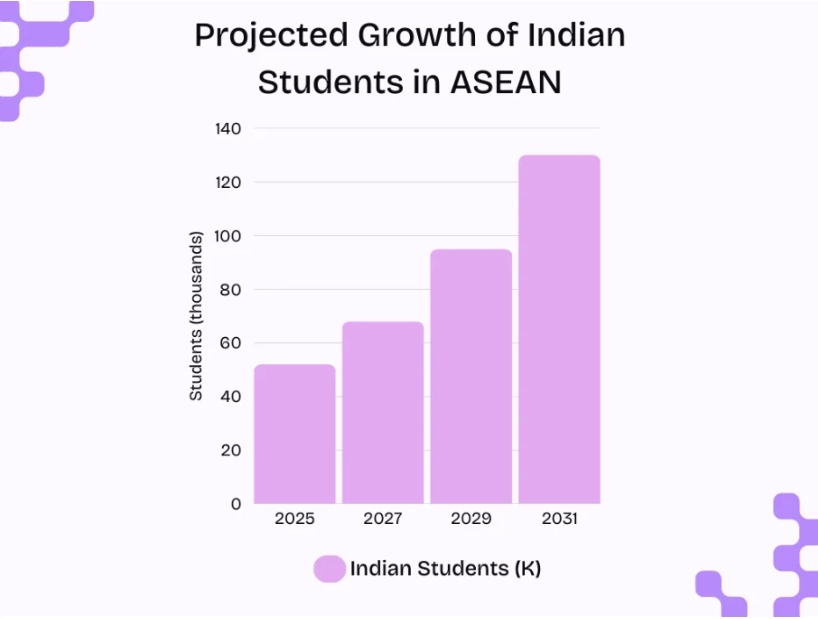
2025-2026: Finalization of framework agreements and bilateral negotiations among member countries with pilot program development.
2026-2027: Pilot programs launched between selected countries, likely starting with Singapore, Malaysia, and Thailand.
2027-2028: Gradual expansion to include additional member states and program types.
2029-2030: Full implementation across all participating ASEAN countries with comprehensive digital infrastructure.
Implementation Challenges
Regulatory Harmonization: Each ASEAN country has unique immigration laws, education standards, and security requirements that must be reconciled through extensive negotiations.
Technology Infrastructure: Developing integrated digital systems for applications, tracking, and verification across multiple countries requires significant investment and coordination.
Security Concerns: Ensuring proper vetting while maintaining efficiency requires sophisticated information-sharing mechanisms between countries with different security protocols.
Economic Disparities: Wealthier nations like Singapore may have concerns about unequal flows of students to their higher-cost education systems, requiring balanced implementation.
Preparing for the Unified Visa Era
Even before the unified visa system is fully implemented, Indian students can take strategic steps to position themselves for Southeast Asian education opportunities. A strong foundation in IELTS preparation, university shortlisting, and visa documentation is essential—and our complete preparation guide can help you get started: Go-To Study Abroad Preparation Visa Guide
Academic Preparation
Strong English Proficiency: Most programs require IELTS or TOEFL scores. Start preparing early to achieve competitive scores of 6.5+ for IELTS or 90+ for TOEFL.
Relevant Coursework: Align your academic preparation with programs of interest in Southeast Asian universities, focusing on subjects that demonstrate your readiness for advanced study.
Research Experience: For graduate studies, research experience and publications strengthen applications significantly, particularly for STEM fields.
Financial Planning
Education Savings: Southeast Asian education is generally more affordable than Western countries, but proper financial planning remains essential for success.
Scholarship Research: Many universities and governments offer scholarships specifically for ASEAN or Indian students, including merit-based and need-based options.
Cost of Living: Understanding expenses across different ASEAN countries helps in budgeting. Monthly costs range from $300-500 in countries like Philippines and Thailand to $1,500-2,000 in Singapore.
Cultural Preparation
Regional Awareness: Learn about Southeast Asian cultures, religions, and social norms to facilitate smooth adaptation and maximize your educational experience.
Language Learning: While English is widely used in education, learning basic phrases in local languages enhances the experience and demonstrates cultural respect.
Network Building: Connect with current Indian students in Southeast Asian universities through social media and alumni networks for insider perspectives and practical advice.
The Future of Education in Southeast Asia
The proposed unified student visa represents just one element of Southeast Asia’s ambitious vision for integrated higher education. Other developments include the ASEAN University Network (AUN), a consortium of leading universities collaborating on research and joint degree programs.
Digital learning integration accelerated by COVID-19 is developing frameworks for blended learning combining online instruction with physical mobility. Growing industry partnerships, particularly in technology, manufacturing, and services sectors, are creating abundant internship and employment opportunities for graduates.
Cities like Singapore, Bangkok, and Kuala Lumpur are developing startup ecosystems where students can engage with entrepreneurship and innovation, preparing them for careers in the region’s dynamic business environment.
Conclusion
Southeast Asia’s move toward a unified student visa represents a transformative moment in international education. For Indian students, this development opens doors to unprecedented opportunities for multicultural learning, regional expertise, and global career prospects in one of the world’s most dynamic regions.
While implementation will take time and require patience as countries navigate technical, political, and logistical challenges, the direction is clear: Southeast Asia is committed to becoming a premier global education destination through enhanced mobility and integration.
The unified visa will make Southeast Asian education more accessible, affordable, and attractive to Indian students seeking world-class education combined with rich cultural experiences. Students who position themselves strategically today will be best placed to benefit from tomorrow’s opportunities.
How MAK Consultants Can Help
At MAK Consultants, we are closely monitoring developments in Southeast Asia’s unified student visa initiative and preparing our services to support Indian students who want to take advantage of this revolutionary opportunity.
Our Comprehensive Services
Expert Counseling: Our experienced consultants provide detailed guidance on choosing the right country, university, and program within the ASEAN region based on your academic goals and career aspirations.
Visa Application Support: Whether applying under current individual country systems or the future unified framework, we ensure your applications are complete, accurate, and compelling with maximum approval chances.
University Selection: We help identify institutions offering the best combination of quality education, regional partnerships, and mobility opportunities aligned with your career objectives.
Documentation Assistance: Our team expertly prepares all necessary documents, from academic transcripts to financial statements, ensuring compliance with requirements across multiple countries.
Pre-Departure Guidance: Comprehensive briefings on living in Southeast Asia, cultural adaptation, and maximizing your regional educational experience.
Ongoing Support: Continued assistance throughout your studies, including guidance on internships, exchanges, and career opportunities across the ASEAN region.
Why Choose MAK Consultants?
Regional Expertise: We maintain relationships with universities and immigration authorities across Southeast Asia, providing insider knowledge and streamlined processing.
Success Track Record: Indian students have successfully begun their Southeast Asian educational journeys with our professional support and guidance.
Updated Information: Our team stays current with evolving visa policies, ensuring you receive the most accurate and timely guidance for your applications.
Personalized Service: We recognize that every student’s situation is unique and tailor recommendations accordingly, considering your academic background, financial situation, and career goals.
Ready to Study in Southeast Asia? Take the First Step Today