

Is Studying Abroad Worth the Cost? ROI-Driven Study Choices Indian Students Must Know
Indian students today face one critical question before choosing a course or country: “Will this degree actually pay off?”
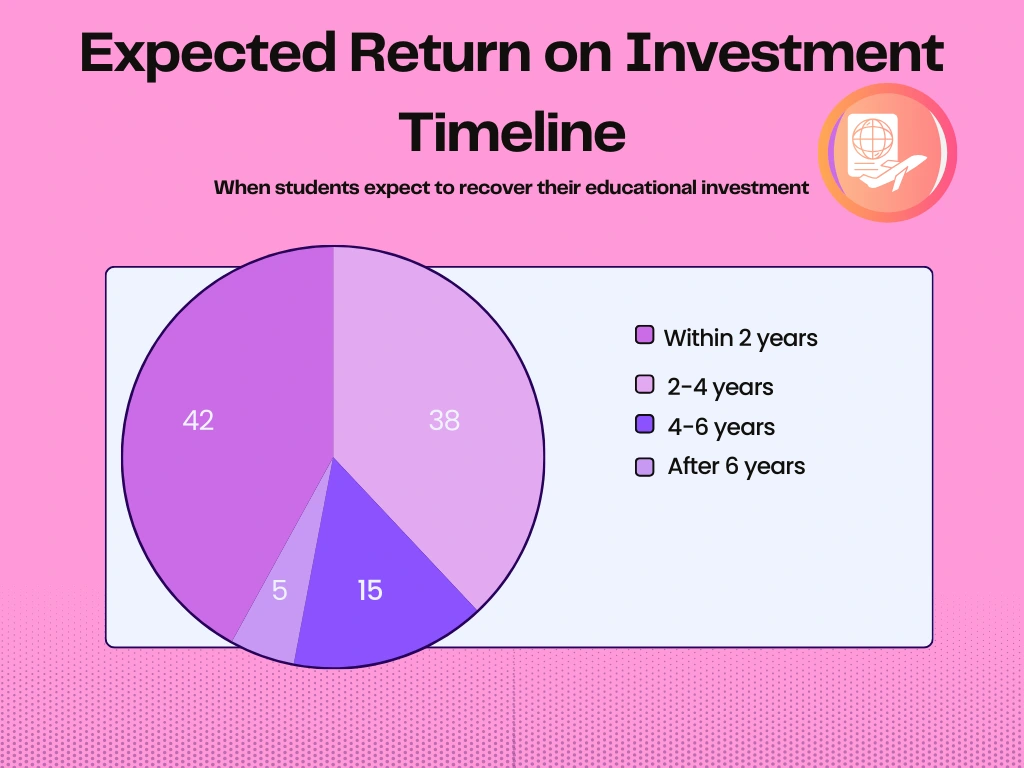
With international education costs ranging between ₹20–50 lakhs, rising visa uncertainties, and intense global competition, Indian students and families are no longer choosing degrees based on passion alone. They are calculating Return on Investment (ROI)—job outcomes, salaries, visa opportunities, and long-term career growth—before making a decision.
- Over 13 lakh Indian students are currently studying abroad (MEA, 2024)
- 72% of Indian students consider “job outcomes” the top factor while choosing a course (QS Student Survey)
- STEM graduates earn 30–45% higher starting salaries compared to non-STEM fields globally
- Students with internships earn 20–30% higher salaries than those without practical experience
The New Educational Economics for Indian Students
Return on Investment (ROI) in education encompasses more than just comparing tuition fees against starting salaries. Indian students today are evaluating a complex matrix of factors that determine whether their educational investment will pay dividends throughout their careers.
The ROI calculation begins with direct costs: tuition fees, accommodation, living expenses, and opportunity costs of time spent studying rather than earning. But it extends far beyond these basics. Students are now factoring in employment rates within six months of graduation, average salary progressions over five to ten years, industry demand for specific skills, and the stability of chosen career paths in an AI-driven economy.
Key ROI factors Indian students now evaluate:
- Tuition fees & living expenses
- Placement rate within 6 months
- Average starting salary
- Visa & post-study work options
- Long-term career stability
- Industry demand in India & abroad
This shift reflects a broader transformation in how education is perceived. Rather than viewing a degree as an end in itself, students see it as a strategic investment in their earning potential and career trajectory. The question isn’t just “What do I want to study?” but “What should I study to build the future I want?”
STEM Courses with the Highest ROI for Indian Students
Science, Technology, Engineering, and Mathematics (STEM) fields continue to dominate student preferences, and the numbers tell us why. Computer Science graduates from tier-one institutions regularly secure starting packages ranging from INR 10-25 lakhs annually, with top performers at premier institutions commanding even higher compensation through campus placements.
The technology sector’s resilience provides another layer of security. Even during economic downturns, demand for software engineers, data scientists, and technology specialists remains robust. Indian IT services companies, global tech giants with Indian operations, and a thriving startup ecosystem create a multi-layered job market that absorbs tens of thousands of engineering graduates annually.
Data Science and Artificial Intelligence have emerged as particularly lucrative specializations. With businesses across sectors rushing to leverage data analytics and machine learning, professionals with these skills find themselves in a seller’s market. Starting salaries for AI/ML specialists often exceed those of traditional software engineers by 30-40%, and the gap widens with experience.
Engineering disciplines beyond computer science also offer strong ROI, though with more variability. Electronics and Communication Engineering graduates find opportunities in telecommunications, semiconductor design, and IoT development. Mechanical and Civil Engineering provide stable, if less spectacular, returns, especially when combined with project management certifications or specialized technical skills.
Visit the link to see QS World University Rankings – Top global universities
Healthcare: High Investment, Higher Returns
Medical education represents perhaps the most dramatic ROI calculation Indian students face. The path is long, expensive, and demanding, but the returns—both financial and in terms of career stability—remain exceptional.
An MBBS degree from a government institution costs relatively little, but securing a seat requires extraordinary academic performance. Private medical colleges, meanwhile, charge fees that can exceed INR 1 crore for the complete program. At this stage, many students evaluate whether Indian or international healthcare pathways offer better long-term value, often relying on structured student counselling and career planning support to make informed decisions.
Doctors in India can expect earnings that grow substantially with specialization and experience. General practitioners in urban areas earn respectable incomes, but specialists in fields like cardiology, orthopedics, or radiology can command fees that place them among the highest-earning professionals in the country. The option to establish private practice provides an additional revenue stream that can multiply earnings significantly.
Pharmacy, nursing, and allied health sciences offer alternative pathways with lower investment requirements and faster entry into the workforce. While these professions may not match the earning potential of doctors, they provide solid middle-class incomes with excellent job security and opportunities for advancement.
Business Education: The MBA Equation
The MBA remains one of the most popular post-graduate choices for Indian students, but the ROI varies dramatically based on the institution. A degree from the Indian Institutes of Management (IIMs) or other top-tier business schools can transform career trajectories, with graduates receiving average packages of INR 20-35 lakhs from campus placements.
However, the MBA market has become increasingly stratified. While elite institutions deliver exceptional returns, mid-tier and lower-tier business schools struggle to provide comparable outcomes. Students investing INR 10-15 lakhs in such programs often find placement opportunities disappointing, with many graduates accepting roles they could have secured without the degree.
Smart MBA candidates now evaluate programs based on specific metrics: placement reports, alumni networks, industry connections, and specialization relevance. Finance and consulting continue to offer the highest starting salaries, while marketing and operations roles provide steadier, if less spectacular, progression.
The rise of specialized master’s programs in areas like Financial Analytics, Business Analytics, and Digital Marketing has created alternatives to traditional MBAs. These programs often cost less, require less time, and lead directly to in-demand roles, making them attractive options for students seeking focused skill development.
Studying Abroad ROI: Best Countries for Indian Students
Studying abroad represents the most significant educational investment most Indian families make, and students approach this decision with particular care. The calculation extends beyond tuition and living expenses to include potential immigration pathways, work experience opportunities, and global career prospects.
Countries like Canada, Germany, and Australia have gained popularity because they offer post-study work permits that allow graduates to gain international experience and potentially offset their educational costs. A two-year program in Canada costing INR 40-50 lakhs might seem expensive, but if it leads to permanent residency and a developed-world salary, the lifetime ROI can be substantial.
The United States remains attractive for STEM students, particularly at the graduate level, where research assistantships and teaching opportunities can significantly reduce costs. American universities’ strong industry connections and the prestige associated with US degrees continue to draw students despite high costs and visa uncertainties.
European destinations like Germany and Norway, which offer low or no tuition fees at public universities, have emerged as value options for budget-conscious students willing to learn a new language and adapt to different teaching methodologies. The quality of education combined with minimal debt makes these destinations increasingly popular for engineering and business programs.
Emerging Fields: Betting on the Future
Forward-thinking students are also exploring newer disciplines that promise strong future returns even if the current market is still developing. Cybersecurity specialists are increasingly sought after as businesses face growing digital threats. Environmental Science and Renewable Energy programs align with global sustainability trends and India’s commitment to green energy transition.
Design thinking, user experience design, and product management have emerged as lucrative career paths, particularly in tech companies and startups. These roles command competitive salaries while offering creative satisfaction, appealing to students seeking both financial security and fulfilling work.
Biotechnology and genetic engineering, while requiring patience and often advanced degrees, position graduates at the cutting edge of healthcare and agricultural innovation. The field’s growth potential, driven by aging populations and food security concerns, suggests strong long-term returns for those willing to invest in specialized knowledge.
The Skills Premium: Certifications and Practical Training
Modern students recognize that formal degrees alone may not provide optimal ROI. They’re supplementing their education with industry certifications, online courses, and practical projects that demonstrate real-world capabilities to employers.
Cloud computing certifications from Amazon Web Services, Microsoft Azure, or Google Cloud Platform can significantly boost employability and starting salaries for IT graduates. Financial modeling certifications enhance MBA graduates’ prospects in investment banking and corporate finance. Digital marketing certifications from Google and Facebook have become near-essential for marketing professionals.
Internships and industry projects during undergraduate years provide crucial experience that employers value. Students who graduate with meaningful internship experience often receive multiple job offers with 20-30% higher compensation than peers without such experience.
Beyond Starting Salaries: Long-Term Career Value
Sophisticated students look beyond immediate placement packages to evaluate long-term career prospects. They research typical salary progressions, leadership opportunities, industry growth rates, and career stability factors that determine lifetime earnings.
Certain careers offer modest starting salaries but exceptional growth potential. Chartered Accountancy, for example, requires significant initial investment of time and effort with relatively low early-career compensation, but successful CAs can build highly lucrative practices or assume CFO roles in corporations.
Similarly, law graduates from National Law Universities may start with salaries lower than engineering graduates, but experienced lawyers at top-tier firms or successful independent practitioners often out-earn their engineering counterparts within a decade.
Making the ROI-Optimal Choice
For students navigating these complex decisions, several principles can guide optimal choices. First, align educational investments with demonstrable market demand, but don’t chase trends blindly. Technology skills remain valuable, but oversupply in certain areas can depress returns.
Second, prioritize institutions with strong placement records and industry connections over brand names alone. A degree from a lesser-known institution with 95% placement rates and strong alumni networks often provides better ROI than a prestigious university with weak industry ties.
Third, consider the total career package: work-life balance, growth opportunities, job satisfaction, and alignment with personal values all contribute to real returns on educational investment. The highest-paying career path isn’t always the most valuable if it leads to burnout or dissatisfaction.
Fourth, remain adaptable and committed to continuous learning. The education that provides best ROI today is the one that builds foundational capabilities while allowing for evolution as industries and technologies change.
Conclusion: Education as Strategic Investment
Indian students’ ROI-focused approach to education reflects maturity and pragmatism that will serve them well in their careers. By carefully evaluating costs, outcomes, and long-term prospects, they’re making informed decisions that balance financial prudence with personal aspirations.
This doesn’t mean abandoning passion or intellectual curiosity. Rather, it means being strategic about how to pursue interests in ways that also build sustainable careers. The most successful students find the intersection between what they’re genuinely interested in, what they’re good at, and what the market values.
As educational costs continue to rise and career landscapes evolve, this analytical approach to educational choices will become even more critical. Students who master the art of evaluating educational ROI—considering both quantitative metrics and qualitative factors—will be best positioned to build rewarding, financially secure futures.
At MAK Consultants, we understand that every student’s situation is unique, and optimal ROI means different things to different families. Our role is to help you navigate these complex decisions with clear information, realistic assessments, and strategic guidance that aligns your educational investments with your career aspirations and financial goals. Your education is one of the most important investments you’ll make—let’s ensure it delivers the returns you deserve.