
Can’t Afford to Study Abroad? How Hybrid Learning Is Changing Study Abroad for Indian Students
Studying abroad has been an aspiration for ambitious students seeking international exposure, world-class education, and career opportunities that go beyond borders. But the pandemic changed how education operates, made online learning the norm, and forced everyone to rethink what learning could be. Now, a new model is emerging that brings the best of both worlds together—hybrid learning.
For international students, hybrid learning is not just a trend—it’s a new doorway to flexibility, affordability, and global possibility. Let’s discuss why hybrid learning is transforming the future of studying abroad and why it might be the smartest choice for students today.
What Is Hybrid Learning?
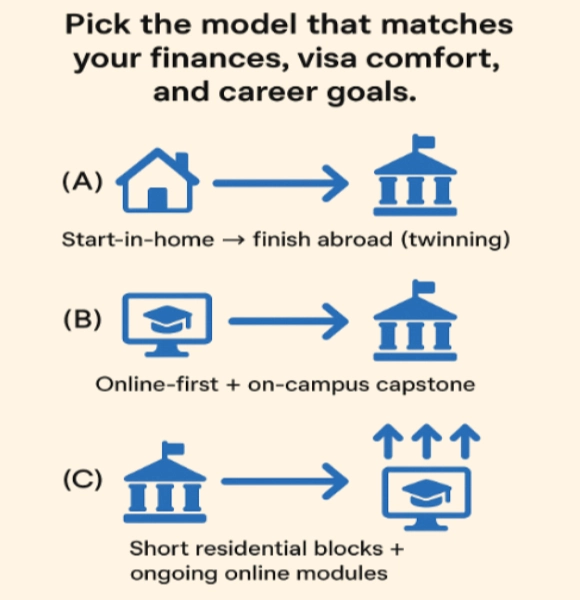
Hybrid learning (or blended learning) combines online and on-campus study in a flexible framework. Students can begin their program online and finish on-campus later or complete on-campus lectures with supporting digital material and online courses.
For study abroad aspirants, this means you can:
- Start your program at home and save up-front costs.
- Relocate to the host country when ready.
- Combine classroom experience with online flexibility.
It’s essentially the middle ground between the traditional campus experience and the digital-first approach that’s grown in the post-COVID era.
Why Hybrid Learning Is Ideal for Indian Students Planning to Study Abroad
1. Flexibility Without Compromise
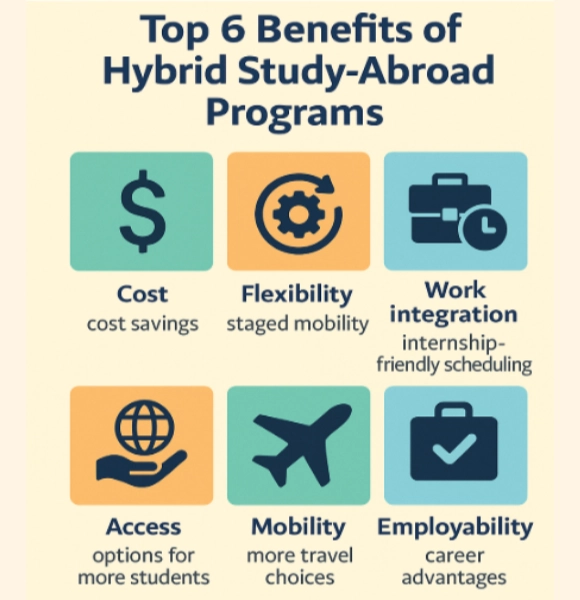
Life doesn’t always go according to plan financial issues, travel restrictions, or family commitments may delay plans. Hybrid learning enables students to start their dream degree right away from home and join the campus later without losing out.
2. Early-Stage Cost Savings
Studying abroad is expensive tuition, living, and accommodation costs add up quickly. By starting online, students can save significantly on living costs for the first semester or year. When they’re financially ready, they can travel abroad to complete the rest.
3. Global Classroom Experience
Hybrid learning welcomes students from around the world into the same online classrooms. Imagine discussing healthcare policy with students from India, the UK, and Canada before meeting some of them in person on campus.
That’s a truly global perspective before ever stepping on a plane overseas.
4. A Safety Net During Times of Uncertainty
The pandemic revealed how fragile mobility is. Travel bans, visa delays, or emergencies can upset plans. With hybrid learning, education is not interrupted, giving students peace of mind that their academic momentum will not be disrupted.
How Universities Are Offering Hybrid Learning
Top universities around the world are redesigning their programs to include hybrid tracks. For example:
- UK & Europe: Certain universities now allow students to commence postgraduate degrees online and then transition to on-campus study.
- Canada & USA: Certain institutions offer hybrid courses where students complete core modules online and advanced/lab work on campus.
- Australia & UAE: Hybrid arrangements allow for regional campuses to deliver initial online learning with subsequent transfer to the main campus.
This flexibility is also making study more accessible, extending to students who might not have otherwise considered studying abroad due to relocation or affordability constraints.
Hybrid Learning vs. Traditional Study Abroad
| Aspect | Traditional Study Abroad | Hybrid Learning Abroad |
| Start of Program | Requires immediate relocation | Can start online, relocate later |
| Costs | High from day one | Lower initial costs, savings on living |
| Learning Style | Fully in-person | Blend of online + offline |
| Flexibility | Limited | High flexibility (study anywhere) |
| Global Networking | On-campus only | Virtual + on-campus combination |
| Risk Management | Travel/visa delays disrupt studies | Smooth transition online-to-offline |
Hybrid learning isn’t a replacement for the campus experience; it’s an enhancement that offers students choice and control.
Skills You Gain Through Hybrid Learning
Hybrid learning isn’t just about convenience. It equips students with essential 21st-century skills employers require:
- Digital Literacy: Comfort with online platforms, collaboration tools, and virtual communication.
- Adaptability: Transitioning between online and campus-based learning teaches flexibility—key to global workplaces.
- Self-Motivation: Online learning demands discipline, preparing students for independent project work.
- Cross-Cultural Communication: Studying with classmates from all over the world builds intercultural competence.
These soft skills, combined with subject expertise, make hybrid learning graduates more competitive in the job market.
The Hybrid Advantage for Study Abroad Aspirants
1. Faster Career Transitions
Students can complete core coursework online, then transition directly into internships, research, or field studies abroad once they arrive.
2. Visa and Immigration Benefits
Starting online reduces pressure to secure a visa immediately, allowing time to prepare for documentation, interviews, and financial arrangements.
3. More Options for Working Professionals
Hybrid models attract not just full-time students but also working professionals who require upskilling. Many can work and study online, then switch to campus mode for specialization.
Challenges and Solutions of Hybrid Learning
Hybrid learning challenges can be effectively addressed through the following solutions:
- Campus disconnect can be resolved by organizing virtual mentoring programs.
- Time zone problems can be managed with access to recorded lectures.
- Self-discipline can be developed through consistent academic advisor support.
Future Prospect: Hybrid Learning as New Normal
As global education trends are being taken up by universities, hybrid learning will grow. In fact, most project hybrid as the norm of international education by 2030.
Students can expect:
- More dual-campus programs (start online, finish abroad).
- AI-powered learning platforms for personalization.
- More scholarships for hybrid routes to attract talent.
- University partnerships across countries for joint hybrid degrees.
Hybrid learning is not a halfway house—it is the evolution of study abroad.
Practical Tips for Students Considering Hybrid Study
- Check Accreditation: Ensure your hybrid program is recognized internationally.
- Understand Visa Rules: A percentage of on-campus study is required for post-study work visas in certain countries.
- Engage Online: Actively participate in discussions, networking, and group work in your online component.
- Prepare for Transition: Use your online component to research accommodation, culture, and lifestyle of your host country.
- Leverage Career Services: Even online, make the most of your university’s career workshops and mentoring programs.
Conclusion: A Smarter Pathway to International Education
Hybrid learning is transforming the landscape of international education. It combines flexibility, affordability, and international exposure, enabling students to start their journey at home and complete it on the global stage.
And for Indian students specifically, hybrid programs open the door to world-class universities without the initial financial or logistical hurdles. It is not Plan B—a second choice—it’s a smarter, more future-ready path.
At MAK Consultants, we receive these latest trends and advise students on the right programs, visa needs, and smooth transitions to their preferred destinations. Whether you wish to study AI, Cybersecurity, Business, or Healthcare, we empower you to take advantage of opportunities like hybrid learning so you can turn your study abroad dream into a reality and an enriching experience.